
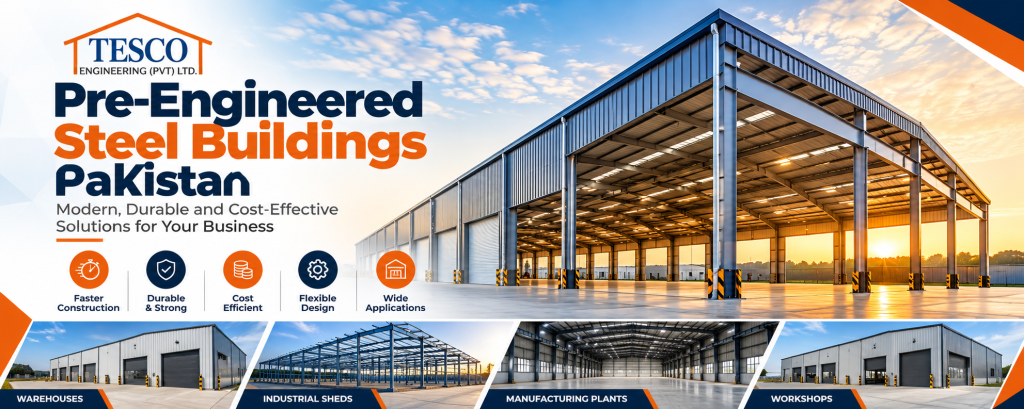
Planning a factory, warehouse, workshop, or industrial facility involves many decisions. Apart from the design, a business owner needs to consider construction time, structural strength, budget, maintenance, and whether the building can support future expansion.
This is one reason pre-engineered steel buildings Pakistan have become a practical choice for many commercial and industrial projects. Instead of completing most structural fabrication at the construction site, the main steel components are manufactured under controlled conditions and then transported to the project location for assembly.
The process can make construction more organized and efficient. More importantly, a properly designed PEB is not simply a collection of standard steel parts. The structure is engineered around the building’s size, purpose, loading requirements, site conditions, and operational needs.
For businesses considering this construction method, understanding how PEBs work and what to look for in a manufacturer can make the decision much easier.
What Are Pre-Engineered Steel Buildings?
A pre-engineered steel building is a structure whose major components are designed and fabricated before they reach the construction site.
The primary frame, secondary steel members, roof system, wall cladding, and other components are produced according to approved engineering drawings. These parts are then transported to the site, where an erection team assembles the structure.
One important point is that “pre-engineered” does not mean that every building has the same design.
A PEB can be customized according to:
- Building length and width
- Required height
- Clear-span requirements
- Equipment and machinery
- Crane requirements
- Roof and wall systems
- Insulation
- Doors and openings
- Site conditions
- Future expansion plans
This flexibility makes PEB construction suitable for a wide range of industrial and commercial applications.
How Does PEB Construction Work?
The process generally starts with understanding what the client actually needs from the building.
1. Project Planning
The manufacturer reviews the building dimensions, intended use, site information, loading requirements, and other technical details.
For example, a warehouse may require high ceilings and wide loading doors, while a manufacturing facility may need space for heavy machinery or overhead cranes.
2. Engineering and Design
After gathering the project requirements, structural engineers prepare the design and detailed drawings.
This stage is extremely important because the steel structure needs to be designed for the actual conditions of the project rather than based on a generic building template.
3. Steel Fabrication
Once the design is approved, the structural components are manufactured.
Cutting, welding, drilling, profiling, and finishing are carried out according to the approved specifications. Factory-controlled production can also make quality checks easier throughout the fabrication process.
4. Transportation and Erection
The completed components are transported to the project site.
After the foundations and anchor arrangements are ready, the steel structure is erected and assembled according to the engineering drawings.
Why Choose Pre-Engineered Steel Buildings in Pakistan?
There are several reasons businesses consider PEB construction for industrial and commercial projects.
Faster Construction
A significant portion of the fabrication takes place before the steel reaches the site. This can reduce the amount of structural work that needs to be performed during the erection stage.
Site preparation and steel fabrication can also progress alongside each other, helping project teams coordinate different stages more efficiently.
Large Open Spaces
Factories and warehouses often need large floor areas without numerous internal columns.
PEB systems can be designed for wide clear spans, giving businesses more freedom when arranging machinery, storage racks, production lines, or vehicles.
Flexible Design
A PEB can be adapted to different requirements. Building height, doors, ventilation, insulation, roof design, mezzanine floors, and other features can be incorporated into the project.
Controlled Fabrication
Manufacturing steel components in a dedicated facility provides greater control over cutting, welding, drilling, and finishing compared with carrying out extensive fabrication in an uncontrolled site environment.
Future Expansion
Businesses do not always remain the same size.
A company may need additional storage or production space after a few years. If expansion is considered during the original design, the building can potentially be planned to accommodate future changes more efficiently.
Common Applications of PEB Structures
PEB construction is particularly useful where large covered areas and flexible internal layouts are required.
Common applications include:
- Warehouses
- Manufacturing plants
- Industrial sheds
- Workshops
- Cold storage facilities
- Textile factories
- Rice and flour mills
- Showrooms
- Distribution centers
- Sports facilities
- Agricultural storage buildings
For example, a warehouse may prioritize storage height and loading access, while a manufacturing facility could require crane systems, machinery openings, ventilation, and additional structural support.
The building should therefore be designed around its intended operation rather than simply its external appearance.
PEB vs. Conventional Construction
Both PEB and conventional construction have their place. The right option depends on the project’s requirements.
| Factor | PEB Construction | Conventional Construction |
| Main structure | Engineered steel | RCC, masonry, or conventional steel |
| Fabrication | Primarily factory-based | More site-based work |
| Construction approach | Manufactured and assembled | More sequential site construction |
| Large clear spaces | Well suited | Depends on structural design |
| Customization | Highly customizable | Highly customizable |
| Future expansion | Can be considered during design | May require additional structural work |
| Common uses | Warehouses, factories, sheds | Residential, commercial, and industrial buildings |
Rather than choosing a construction method based only on price, project owners should consider the building’s intended use, timeline, structural requirements, and long-term plans.
How to Choose a PEB Manufacturer in Lahore
Choosing the right PEB manufacturer Lahore is one of the most important decisions in the project.
Start by looking at the manufacturer’s engineering experience. Ask whether the company has qualified engineers who can handle structural calculations, detailed drawings, connections, and project-specific requirements.
The manufacturing facility is equally important. If possible, visit the facility and look at the fabrication process, equipment, material handling, welding practices, and quality-control procedures.
You should also ask for previous project examples.
A manufacturer that has worked on warehouses may have different experience from one that regularly handles factories with heavy machinery or overhead cranes.
Before signing a contract, clarify:
- What is included in the quotation?
- Is structural engineering included?
- Who handles transportation?
- Is site erection included?
- What type of steel is being used?
- What coating or corrosion protection is provided?
- Are insulation and cladding included?
- What is the expected project timeline?
- What quality documentation will be provided?
A detailed quotation can prevent misunderstandings later.
What Affects the Cost of a PEB?
PEB pricing depends on much more than the size of the building.
The total project cost can be influenced by:
- Building dimensions
- Structural span
- Building height
- Steel specifications
- Roof and wall cladding
- Insulation
- Doors and windows
- Crane requirements
- Mezzanine floors
- Foundation requirements
- Transportation distance
- Site accessibility
- Installation requirements
For this reason, generic “per square foot” prices should be treated carefully.
Two buildings with the same floor area can have very different structural requirements and therefore very different costs.
A professional manufacturer should review the project specifications before preparing a final quotation.
Why Work With an Experienced PEB Manufacturer?
PEB construction involves several connected stages. A problem during design can affect fabrication, while a fabrication issue can create difficulties during installation.
Working with an experienced manufacturer can help keep these stages coordinated.
Tescosteell provides engineering, fabrication, and erection services for pre-engineered buildings and steel structures. The company states that it has been operating since 1988 and has completed hundreds of projects in Pakistan.
For a project owner, however, experience should always be evaluated alongside current manufacturing capacity, engineering resources, quality procedures, and relevant project experience.
The goal is to find a manufacturer capable of handling the specific requirements of your building.
Frequently Asked Questions
Are pre-engineered steel buildings suitable for factories?
Yes. PEB structures are commonly used for factories because they can provide large open areas and can be designed around machinery, production lines, cranes, storage, and access requirements.
Are PEB buildings cheaper than conventional buildings?
The cost depends on the project’s specifications. PEB construction can offer efficiencies in fabrication and installation, but the final price depends on steel quantity, foundations, cladding, insulation, transportation, and other requirements.
Can a PEB building be expanded later?
Potentially, yes. Future expansion should be discussed during the original engineering stage so the structure and foundation requirements can be planned accordingly.
How long does a PEB building last?
There is no single lifespan that applies to every PEB. Service life depends on structural design, material quality, corrosion protection, environmental conditions, maintenance, and building use.
Can PEB buildings include insulation?
Yes. Roof and wall insulation can be incorporated when the building requires better temperature control or thermal performance.
How do I find a reliable PEB manufacturer in Lahore?
Review the company’s engineering capabilities, manufacturing facility, previous projects, quality procedures, erection experience, materials, warranty terms, and detailed quotation before making a decision.
Conclusion
Pre-engineered steel buildings Pakistan offer a practical construction solution for businesses that need spacious, adaptable, and professionally engineered facilities.
From warehouses and factories to workshops and industrial sheds, PEB systems can be customized around the way a business actually operates. Their factory-based fabrication process can also help organize construction and reduce the amount of structural work required at the project site.
However, the quality of the finished building depends heavily on the company handling the project. Engineering, steel specifications, fabrication accuracy, connections, corrosion protection, and installation all matter.
If you are searching for a PEB manufacturer Lahore, compare manufacturers based on their technical capabilities and relevant experience rather than choosing solely on the lowest quotation.
Tescosteell provides engineering, fabrication, and erection solutions for pre-engineered steel buildings and industrial structures in Pakistan.
Ready to Start Your PEB Project?
Have a warehouse, factory, workshop, or industrial building in mind? Share your project requirements with Tescosteell to discuss the appropriate structural solution, design requirements, and fabrication options.
Suggested Image Alt Text:
Pre-engineered steel buildings Pakistan – Tescosteell PEB manufacturer Lahore
Suggested Internal Links
- Steel Fabrication Services
- Structural Steel Engineering
- Industrial Steel Structures
- Overhead Crane Systems
- PEB Projects

Leave a Comment